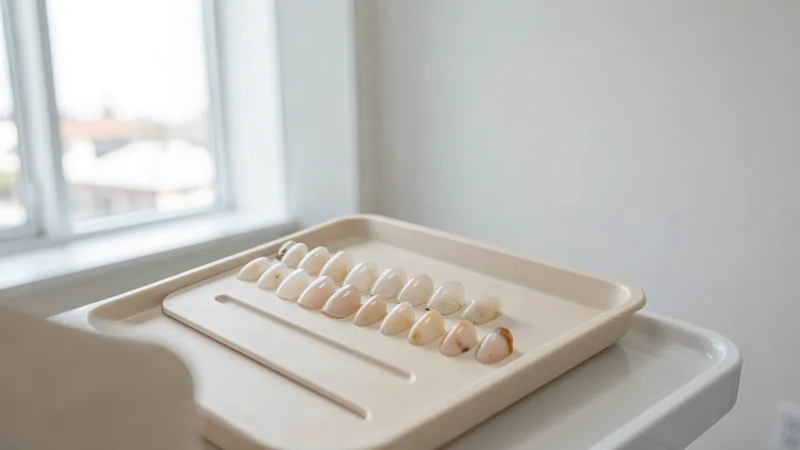
We live in an era of filters. Skin is smoothed, teeth are whitened, and smiles are reshaped with a swipe — and the same instinct has quietly crept into dental marketing. Some practices present portfolios of soft, glowing, diffused photographs in which teeth look flawless because the light was arranged to hide their flaws. Elite cosmetic dentists reject that approach entirely. The most rigorous standard in the field — the photographic protocol used for credentialing by the American Academy of Cosmetic Dentistry — forbids diffusers and filters outright and demands that cases be documented under direct, undiffused macro light. Here is why that standard exists and why it should matter to you. If you have been weighing up cosmetic dental treatment for a home around Sioux Falls, SD, this guide covers how it actually works, what it tends to cost, and where the results usually fall short.
Why the Rules Exist: Anyone Can Claim the Title
Diffused Light Is a Tool of Concealment
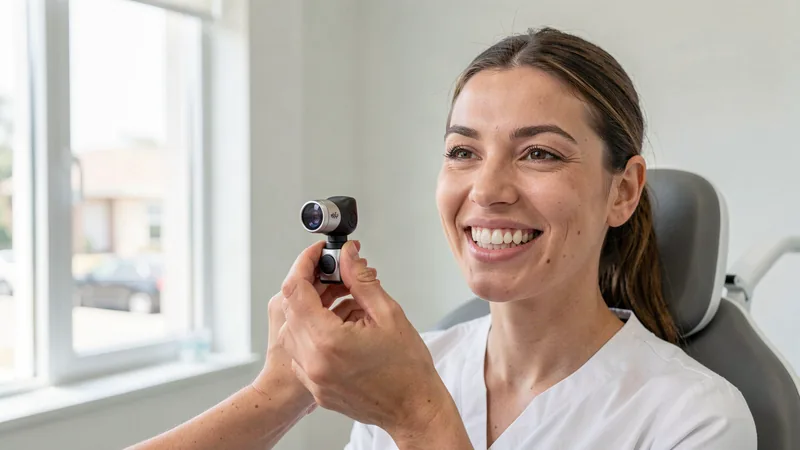
Diffused light — softboxes, bouncers, diffusers, filters — smooths surface texture, softens glare, and casts forgiving shadows. In clinical terms, that is concealment: it hides microscopic defects at restorative margins, blends mismatched shades, and masks gaps or bulk where porcelain meets natural tooth. A beautiful diffused photo can be a beautiful lie. Direct, undiffused light, by contrast, acts as a high-fidelity diagnostic probe. It exposes raw enamel micro-texture, the subtle imbrication lines and gloss of natural dentition, true translucency and opalescence at the incisal edges, and even a fraction of a millimeter of cement flash or micro-gap at a margin. Under the AACD protocol, a submission taken with improper lighting is not graded poorly — it fails automatically.
The 24-View Standard: No Place to Hide
Standardized documentation requires 24 total views — 12 before and 12 after — captured at identical magnifications, alignments, and lighting. The protocol uses three magnification ratios: 1:10 for the full face, 1:2 for the smile zone, and 1:1 for high-magnification micro-views of the upper front teeth. On cameras with cropped sensors, a 1.5x conversion is dialed into the lens barrel (1:10 becomes 1:15, 1:2 becomes 1:3, 1:1 becomes 1:1.5) so the framing stays comparable across equipment. The same case is documented down to the enamel surface level, before and after, under identical conditions — which is why a filtered or tilted set of images is immediately obvious to anyone trained to look.
The Rules That Fight Distortion
Three rigid rules keep the photographs honest. First, perpendicularity: the camera must be held at 90 degrees, horizontally and vertically, to the subject; angling from above or below distorts the incisal plane and the length-to-width ratio of the teeth. Second, no tilt compensation: tilting the camera to make crooked teeth look straight is a serious protocol violation — the camera must align to the patient's interpupillary line and facial midline, reproducing a canted smile line exactly as it exists. Third, the dry field: saliva, blood, sealant, plaque, or excess cement invalidates a photograph, because moisture acts like tiny lenses that wash out surface texture. Assistants keep the field dry with air syringes and keep mirrors from fogging so every detail is recorded.
Red Flags in a Dentist's Portfolio
| Red Flag | What It May Be Hiding |
|---|---|
| Stock photos or generic before-and-after libraries | Images that do not represent the dentist's actual work |
| Soft, glowing, diffused lighting | Masked margin defects, micro-gaps, shade mismatches, cement flash |
| Tilted camera angles | A crooked smile line or facial asymmetry the dentist chose not to show |
| No trial smile or diagnostic mock-up | A rushed workflow heading straight into irreversible tooth shaving |
| No retracted close-up views of actual patients | Insufficient case volume or results that will not survive scrutiny |
We Shoot to See
For the dentist, the camera is a self-critique tool — a way to review their own margins and textures at up to 10x magnification and to share micro-details with the lab that fabricates the restorations. For you, the patient, a dentist who enforces undiffused macro photography is demonstrating a simple thing: honesty. They photograph to see, not to flatter. When you evaluate cosmetic dentists in Sioux Falls, South Dakota, ask to see retracted, high-magnification images of real cases taken under direct light. When you compare providers in Sioux Falls, South Dakota, prefer the portfolios that survive harsh lighting over the ones that depend on softness. The standard exists to protect your smile — and any dentist in Sioux Falls, South Dakota who embraces it is telling you exactly how they want their work judged.